
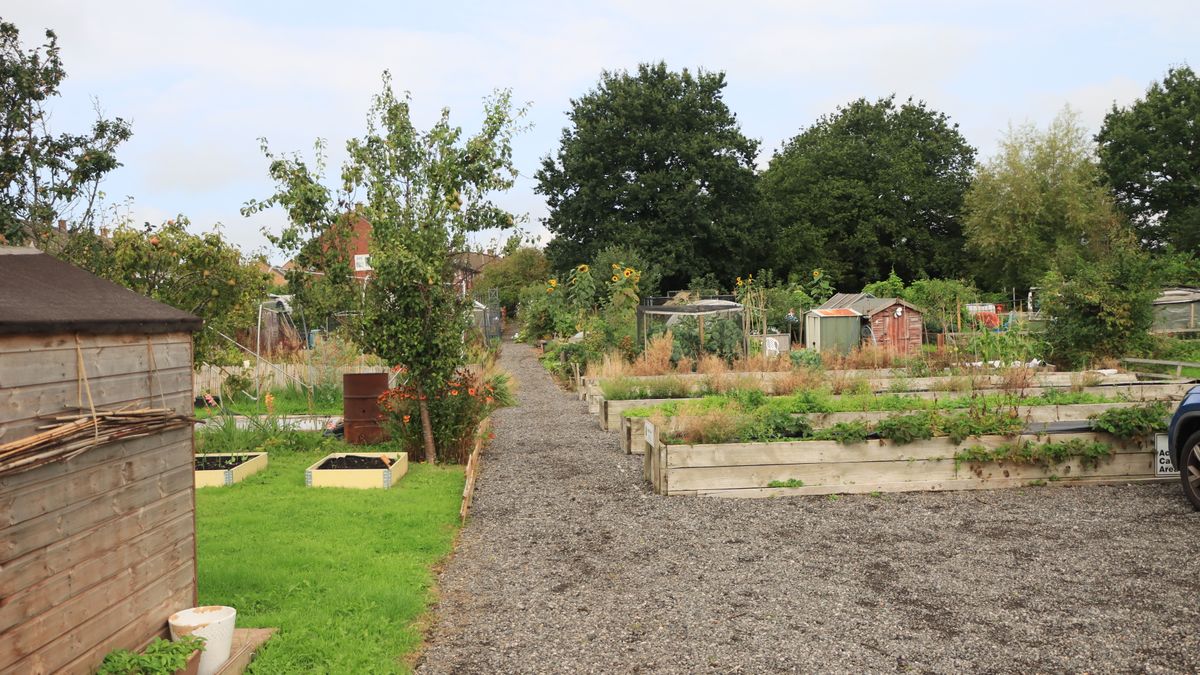
A new allotment rarely looks like the pictures in the seed catalogues. More often it is a rectangle of couch grass with a collapsed shed at one end and a rusty water butt at the other. That is completely normal, and it does not mean you have taken on something unmanageable. What it does mean is that the first job is not digging — it is looking, measuring and making a few decisions.
Give yourself a full visit with a notebook and no tools at all. Walk the plot slowly and write down what you actually have, not what you wish you had.
If the plot has been neglected, do not rush to hire a rotavator. Chopping creeping roots into small pieces is the fastest way to turn one patch of bindweed into fifty.
The single biggest cause of new plot holders giving up is trying to clear everything at once, exhausting themselves in April and then watching the weeds win by June. Do it the other way round: pick a manageable rectangle — roughly 3 metres by 1.2 metres is plenty — and clear only that.
Strim or scythe the top growth first and cart it to the compost heap. Then fork out the roots properly, following each couch rhizome and dock taproot as far as it goes. Roots come out far more easily a day or two after rain, when the ground is moist but not sodden. Take your time here; a bed cleared thoroughly in spring will need only minutes of weeding a week later on.
Everything you have not cleared yet should be covered. Sheets of cardboard weighted with bricks, old tarpaulin, or thick black polythene will smother most annual weeds within a season and weaken the perennials underneath. It looks scruffy, but it buys you time and it keeps the soil alive underneath.
Before you spend money on manure, lime or fertiliser, find out what you are actually working with. A basic pH kit costs very little and takes ten minutes. Most vegetables are happy between pH 6.0 and 7.0, though brassicas prefer something closer to neutral and potatoes tolerate slightly acid soil.
A jar test tells you the texture. Half fill a clean jar with soil, top up with water, shake hard and leave it overnight. Sand settles first, then silt, then clay on top. What you see will shape how you work: sandy plots drain fast and need plenty of organic matter dug in each year, while clay holds nutrients but is cold, heavy and slow to warm in spring.
Whatever the result, the answer is nearly always the same — add well-rotted compost or manure in autumn and let the worms do the mixing. Only lime if your test shows a genuinely acid soil and you plan to grow brassicas. Never lime and manure at the same time; they cancel each other out.
Beds should be narrow enough that you can reach the middle from either side without standing on the soil. Around 1.2 metres is the classic width. Paths of 45 to 60 centimetres give you room to kneel and wheel a barrow; a mown grass path can be narrower if space is tight.
Run the long axis of the beds north to south if you can, so both sides get sun through the day. Peg out the corners with string lines before you commit, then live with the layout for a week and see whether it still makes sense when you are carrying a full watering can.
Scaffold boards, bark chippings or even flattened cardboard will keep paths clear. Permanent edges are worth the effort in year one because they stop grass creeping into your growing space.
Your first season is about confidence, not variety. Choose things that germinate reliably, grow quickly and smother weeds as they go.
Leave the fussy crops — celery, aubergines, cauliflower — until you know your plot and your watering routine.
Little and often beats heroic weekends. Two or three short visits a week in summer, twenty minutes of weeding each time, keep a plot in good order far more easily than one long session a fortnight. Keep bare soil covered with compost, leafmould or a living green manure so weeds never get a clear run at it.
Keep a simple notebook of what you sowed, when it came up and what the weather did. By the end of your first year you will have a record that is worth more than any general guide, because it is about your soil, your microclimate and your plot. Enjoy the small wins — the first radish, the first proper bucket of potatoes — and let the rest of the plot wait its turn.

Hi, my name is Anthony kuber. I am artist and fashion designer.
I love to travel and writing blogging.
Your email address will not be published. Required fields are marked *
Software Developer & Writer
Hey, I'm Diva, a developer and writer blending code and creativity. I'm driven by a deep curiosity and a relentless pursuit of excellence. Join me as I craft digital solutions and captivating stories.


